Published by Clever Fox Publishing
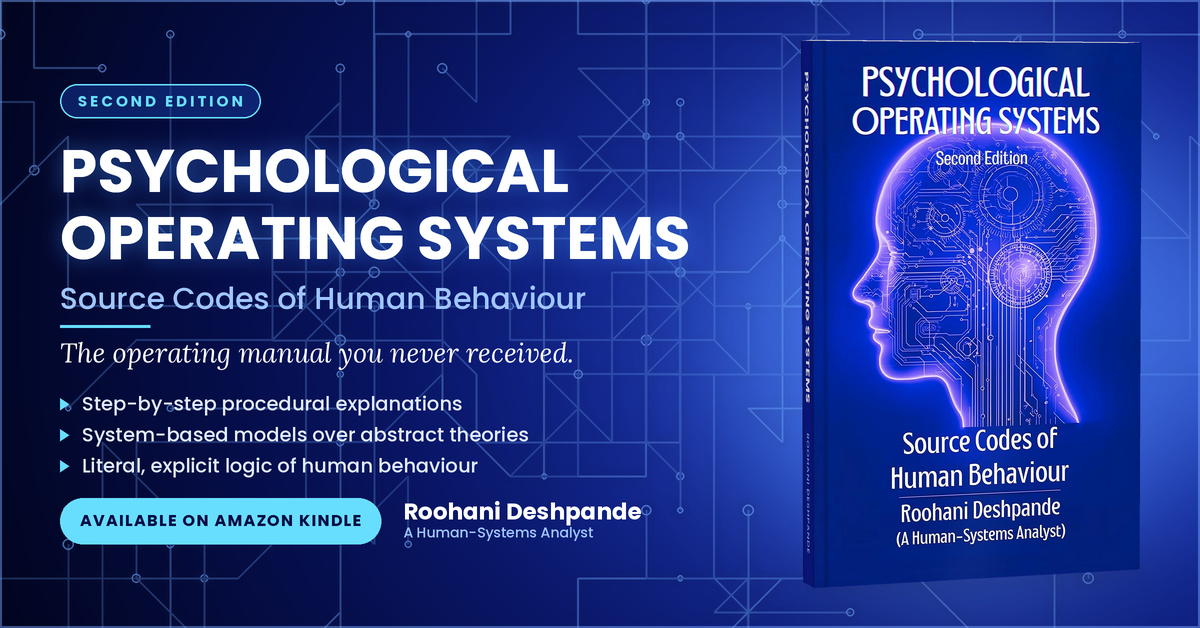
Human interactions often involve unspoken rules, different ways of processing information, and communication gaps that can be difficult to explain. Why do people interpret the same situation differently? Why do some prioritize social harmony while others focus on factual accuracy, direct communication, and internal consistency? These questions form the foundation of Psychological Operating Systems: Source Codes of Human Behaviour, a thought-provoking book by Roohani Deshpande that presents a distinctive framework for understanding human psychology through the language of computer operating systems.
Drawing parallels between human cognition and computer systems, Deshpande introduces an original model that explores how individuals with different psychological operating systems perceive situations, communicate, and interact. Rather than relying solely on abstract psychological theories, the book adopts a structured, system-based approach to examining behavioural patterns and the underlying mechanisms that influence human relationships.
Understanding Human Behaviour Through a Systems-Based Lens
In everyday life, people frequently encounter situations in which their reasoning differs from that of others. A conversation intended to communicate facts may be interpreted as insensitive, while an attempt to maintain harmony may appear indirect or unclear to someone who values explicit communication. Such differences can create misunderstandings even when individuals have no intention of causing conflict.
Psychological Operating Systems: Source Codes of Human Behaviour explores these differences by presenting human behaviour through the concept of distinct internal operating systems. Much like computer systems process information according to specific rules and configurations, people may interpret information and respond to their surroundings through different cognitive and social frameworks.
The book examines how neurological differences can contribute to variations in information processing and communication. It also explores how people learn and navigate social expectations, including the unwritten rules that influence everyday interactions. By examining these patterns, the author offers readers a framework for understanding why certain interactions flow naturally while others repeatedly encounter communication barriers.
Exploring Two Contrasting Approaches to Social Interaction
A central element of the book is its examination of two broad social-cognitive strategies. One prioritizes social cohesion, interpersonal harmony, and the expectations that help maintain relationships. The other emphasizes authentic expression, factual accuracy, direct communication, and consistency in reasoning.
These approaches provide a lens through which readers can examine differences in how people communicate and make sense of the world. The book explores how individuals operating with different priorities may experience friction when their assumptions, expectations, or communication styles do not align.
Rather than treating these differences simply as personal disagreements, Deshpande uses the operating-system analogy to examine the underlying patterns that may contribute to recurring misunderstandings. This perspective encourages readers to consider how different cognitive and social approaches shape interactions, offering a structured way to interpret situations that might otherwise seem confusing or contradictory.
Connecting Individual Psychology with Social Structures
The framework extends beyond personal relationships to consider the broader architecture of society. The book examines how individual behavioural patterns can contribute to shared social expectations, cultural norms, and collective ways of interacting.
Social systems often depend on conventions that are understood without being explicitly communicated. While these conventions can support cooperation and a sense of belonging, they may also create challenges for people whose reasoning or communication styles differ from prevailing expectations.
By connecting individual operating systems with wider societal patterns, the book invites readers to reflect on how social structures develop and how different ways of processing information influence collective behaviour. This broader perspective makes the framework relevant not only to interpersonal communication but also to discussions about social organisation, cultural expectations, and the experience of navigating complex human environments.
A Resource for Neurodiverse and Analytical Readers
Informed by neurodiverse perspectives, Psychological Operating Systems: Source Codes of Human Behaviour is intended for readers seeking clearer, more explicit explanations of human behaviour. Its structured approach may particularly appeal to neurodivergent readers and analytical thinkers who prefer procedural models, logical explanations, and system-based frameworks over abstract descriptions.
The book also offers a perspective for readers who simply want to understand why people think, communicate, and respond differently. By presenting psychological and social patterns through familiar concepts drawn from information technology, Deshpande creates an accessible conceptual framework for examining the complexities of human interaction.
As conversations around neurodiversity, communication differences, and social expectations continue to develop, the book contributes a distinctive perspective to the exploration of how people interpret the world around them. Its central premise encourages readers to look beyond surface-level behaviour and consider the different internal frameworks that may shape an individual's responses.
About the Author
Roohani Deshpande is an IT professional who writes about human psychology, neurodiversity, and insights into the world around us. She brings a distinctive systems-based perspective to subjects ranging from everyday communication gaps to broader social structures. Drawing on the conceptual language of information technology, her writing explores human experiences through structured models and logical frameworks, offering readers an alternative way to examine familiar behavioural patterns.
About the Book
Psychological Operating Systems: Source Codes of Human Behaviour by Roohani Deshpande presents a systems-based framework for exploring human psychology, cognitive differences, communication challenges, and societal patterns. Combining the language of computer operating systems with observations about human interaction, the book is suited to readers interested in neurodiversity, analytical thinking, social behaviour, and structured approaches to understanding people.
The book invites readers to reconsider everyday interactions and explore the different psychological frameworks that influence how individuals communicate, reason, and relate to one another.
Published by Clever Fox Publishing.